1. Creative is now the biggest performance variable
Targeting has been commoditised. Every advertiser on Meta, TikTok, YouTube and Google now feeds the same broad-match, algorithmic delivery systems, and those systems optimise better than any manual audience build. What is left to control is the asset itself — the hook, the framing, the message and the proof.
That is a fundamental shift in where budget should go. In 2026 the brands winning on paid social are not the ones with cleverer media buying; they are the ones shipping more distinct creative concepts each month and killing the losers quickly.
- Volume of concepts beats polish on a single hero asset
- First three seconds decide the cost per acquisition
- Creative testing cadence is a growth lever, not a nice-to-have
- Native-looking content outperforms studio-perfect ads
2. AI moves from novelty to production line
The interesting use of AI in marketing is no longer generating a finished advert. It is compressing the unglamorous middle of production: scripting variants, cutting long-form footage into dozens of short edits, generating captions and voiceovers, localising campaigns and drafting the fortieth version of a headline.
The teams getting value treat AI as a throughput multiplier with human judgement at both ends — a strategist setting the brief, and an editor protecting brand voice. The teams getting burned publish unedited output and wonder why engagement collapsed.
- Rapid variant generation for creative testing
- Long-form to short-form repurposing at scale
- Automated captions, subtitles and localisation
- Concept and storyboard drafting before the shoot
- Human review for accuracy, tone and brand safety
3. Short-form video becomes the default brand format
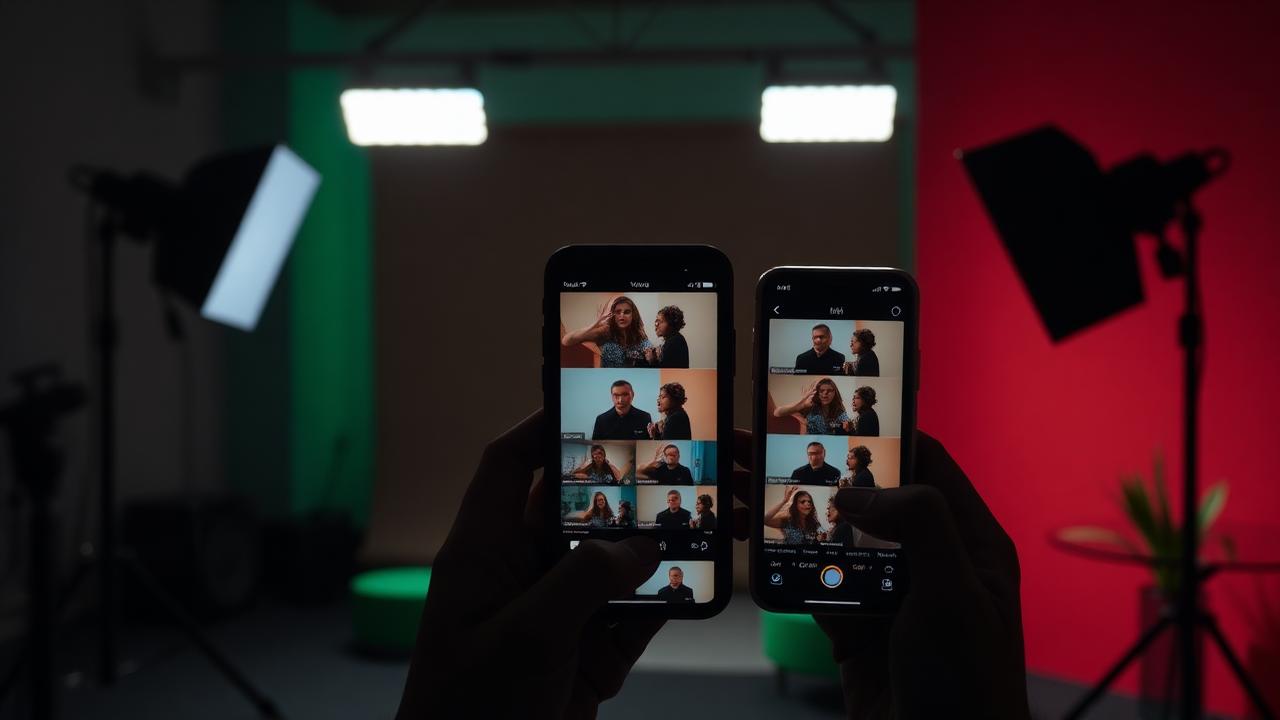
Vertical video is no longer a channel tactic — it is the base unit of brand communication. Product explainers, recruitment, thought leadership, case studies and customer testimonials all now perform better as a 20 to 45 second vertical edit than as a page of copy or a corporate sizzle reel.
The winning structure has settled: a specific hook that names the audience or the problem, immediate visual proof, one idea only, and a soft call to action. Shoot once, cut many, publish across TikTok, Reels, Shorts, LinkedIn and your own site.
- Hook within the first two seconds, no logo intros
- Sound-off legibility with burned-in captions
- One message per edit rather than a feature list
- Batch filming days to keep cost per asset low
- Repurpose top performers into paid social
4. Creator partnerships replace traditional influencer buys
The one-off sponsored post is fading. What works in 2026 is longer creator relationships where the creator understands the product well enough to talk about it unscripted, and where their content is also licensed and run as paid media against cold audiences.
Mid-tier and niche creators consistently outperform celebrity reach on cost per acquisition because their audiences are specific and their endorsement reads as genuine. For most UK brands, three to five committed creators beat twenty one-off posts.
- Multi-month partnerships over single posts
- Whitelisting and paid amplification of creator assets
- Niche relevance prioritised over follower count
- Performance tracked with unique codes and landing pages
5. Brand building and search behaviour converge
Discovery has fragmented. People search inside TikTok, ask AI assistants for recommendations, read Reddit threads and only then type a branded query into Google. That means the classic split between 'brand marketing' and 'performance marketing' no longer describes how customers actually behave.
The practical response is to be quotable and consistent everywhere: clear positioning, an opinion worth repeating, structured content that AI systems can summarise accurately, and enough third-party mentions that your name shows up when someone asks a machine who to hire.
- Clear, repeatable positioning across every channel
- Content structured for AI summarisation and citation
- Reviews, PR and third-party mentions treated as SEO
- Branded search volume tracked as a brand health metric
6. Personalisation gets simpler, not creepier
With third-party cookies effectively gone and consent enforcement tightening, hyper-targeted retargeting has lost its edge. The replacement is first-party personalisation: using what customers tell you directly — sector, service interest, purchase history, lifecycle stage — to change the message rather than to chase people around the internet.
In practice that means segmented email, dynamic landing pages by industry, and creative variants written for specific customer types. It is less invasive, more durable and usually more effective.
- First-party data captured through forms, quizzes and CRM
- Sector-specific landing pages and creative variants
- Lifecycle email replacing broadcast newsletters
- Consent-aware measurement built in from the start
7. Proving creative works: the new measurement stack
Creative budgets get cut when nobody can show what they returned. The modern stack combines platform data for in-flight decisions, self-reported attribution on enquiry forms for direction, and incrementality or geo testing for the big questions.
Set the standard at concept level: every creative idea gets a hypothesis, a spend threshold and a kill rule. Over a quarter that produces a library of proven angles you can rebuild endlessly, which is the real compounding asset.
- Concept-level reporting, not just campaign-level
- Self-reported 'how did you hear about us?' on all forms
- Hold-out or geo tests for brand-level spend
- A documented creative library of winning angles
8. What to do in the next 90 days
Trends only matter if they change your operating rhythm. Here is the sequence we run with clients moving to a creative-led model.
- Days 1-30 — Audit current creative and define three core angles
- Days 31-60 — Batch film, build an AI-assisted edit workflow
- Days 61-90 — Test at concept level, scale winners, sign creators
- Ongoing — Monthly creative review with kill and scale rules