Your website is your most important sales asset. It works around the clock, represents your brand to every new prospect, and often determines whether a visitor becomes a lead or bounces to a competitor. In 2026, simply having a website is not enough. It needs to be fast, mobile-first, search-friendly, and built to convert.
1. Website performance is now a profit metric
In 2026, a slow website is not just a technical inconvenience — it is a direct drain on revenue. Google has made page experience a core ranking factor, and users have made speed a trust signal. A site that takes more than three seconds to load loses more than half of its mobile visitors before they ever see an offer.
High performance means fast First Contentful Paint, stable layout shifts, and quick interaction readiness. It also means your site works flawlessly on every device, from the latest flagship phone to a budget Android on a 3G connection. When performance improves, bounce rates fall, time-on-site rises, and conversion rates follow.
- Every 1s delay reduces mobile conversions by up to 20%
- Google uses Core Web Vitals as a ranking signal
- Fast sites earn higher Quality Score in paid search
- Mobile-first indexing rewards responsive, lightweight pages
- Users associate speed with professionalism and trust
2. Core Web Vitals: the three numbers that matter
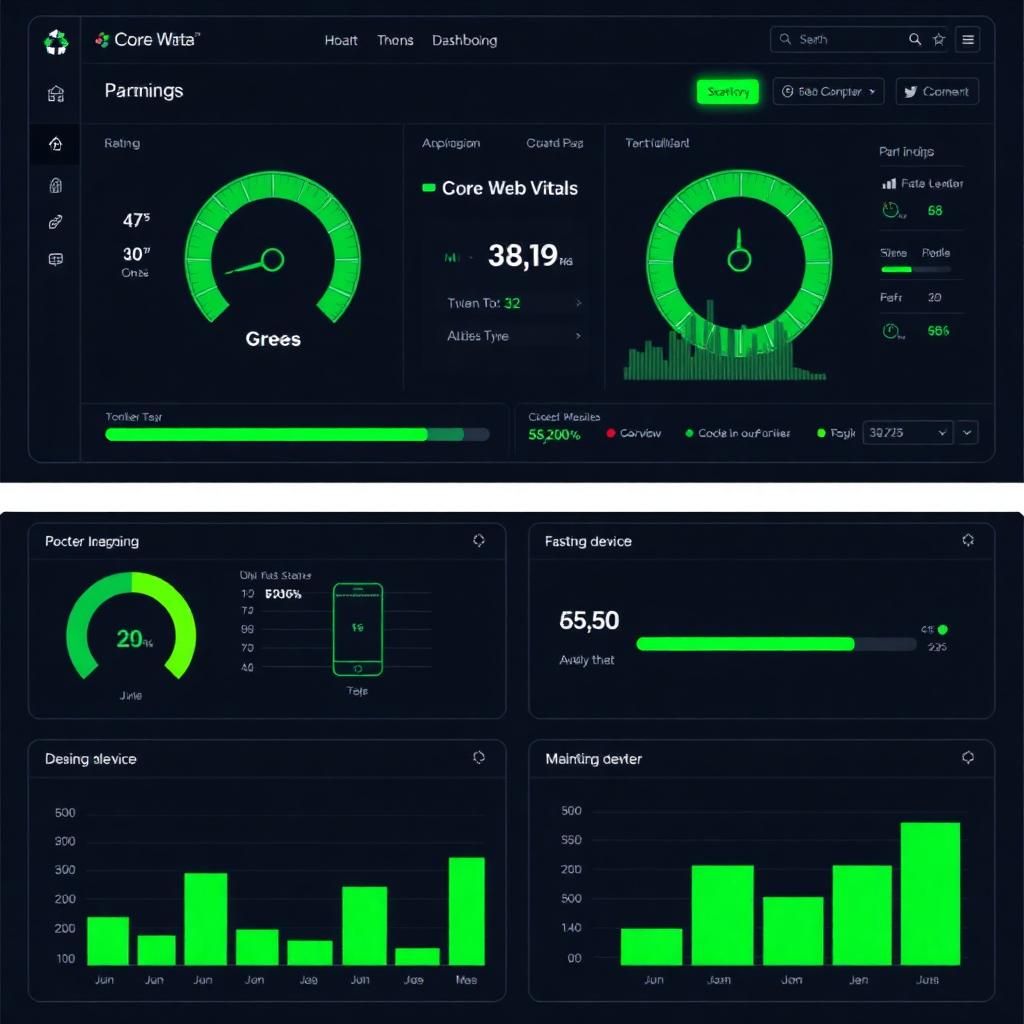
Google's Core Web Vitals are three measurable signals of real-world user experience. Largest Contentful Paint (LCP) measures how fast the main content loads. Interaction to Next Paint (INP) measures how quickly the page responds to taps and clicks. Cumulative Layout Shift (CLS) measures visual stability while the page loads.
In 2026, these metrics are not optional benchmarks. They influence organic rankings, ad costs, and whether visitors stay long enough to convert. A high-performance website is built around optimising all three from the first line of code to the final image asset.
- LCP: largest visible element should load within 2.5 seconds
- INP: interactions should feel instant, ideally under 200ms
- CLS: page elements should not unexpectedly shift during load
- Regular Lighthouse and PageSpeed audits keep performance honest
- Real-user monitoring captures data from actual devices
3. Mobile-first is the only first impression
More than 60% of UK web traffic now comes from mobile devices. Google indexes and ranks the mobile version of your site first. That means your mobile experience is not a secondary version of your desktop site — it is the primary version your customers and search engines see.
A high-performance mobile site uses responsive layouts, compressed media, accessible typography, and thumb-friendly navigation. It avoids intrusive interstitials, pop-ups that obscure content, and forms that are impossible to complete on a small screen. Mobile-first design forces you to prioritise what matters most.
- Responsive breakpoints tailored to real device usage
- Touch targets large enough for accurate interaction
- Readable font sizes without pinch-zooming
- Simplified navigation and clear calls-to-action
- Fast checkout or enquiry flows on mobile
4. Speed is a technical SEO foundation
Search engine optimisation is no longer just about keywords and backlinks. Technical SEO — the way your site is built, served, and structured — determines whether search engines can crawl, index, and rank your content efficiently. A slow, bloated site wastes crawl budget and sends negative engagement signals.
High-performance websites use clean code, semantic HTML, structured data, lazy loading, and efficient caching. They deliver assets from fast hosting or a content delivery network, minimise render-blocking resources, and keep third-party scripts under strict control. The result is better rankings for every page, not just the homepage.
- Clean URL structure and internal linking
- XML sitemaps, robots.txt and canonical tags
- Schema markup for articles, services, FAQs and local business
- Image optimisation with next-gen formats like WebP
- Server-side rendering or static generation for fast first paint
5. Performance and conversion design work together

A beautiful website that loads slowly still fails. A fast website with poor messaging also fails. The best results come when performance and conversion design are planned together. Every page should have a clear goal, a clear value proposition, and a clear next step for the visitor.
High-performance conversion design reduces friction. It uses compelling headlines, scannable content, trust signals, social proof, and prominent calls-to-action. It also removes unnecessary fields, uses smart defaults, and makes the next action feel effortless. Speed removes the waiting; design removes the confusion.
- One primary call-to-action per page section
- Form fields kept to the minimum needed to convert
- Trust signals: reviews, certifications, guarantees
- Visual hierarchy that guides the eye to action
- A/B testing to refine layout, copy and offers
6. Performance, security and trust are inseparable
A modern website must be fast and safe. HTTPS, secure hosting, regular updates, and clean code protect both your business and your visitors. Search engines flag insecure sites, browsers warn users away from them, and customers trust secure sites more with their data and payments.
High-performance hosting also means reliable uptime, fast DNS, and the ability to scale during traffic spikes. Whether you run a local service business or an e-commerce store, downtime and slow response times cost money and damage reputation. Reliability is part of performance.
- SSL certificate and HTTPS across every page
- Regular platform, plugin and dependency updates
- DDoS protection and Web Application Firewall (WAF)
- Automated backups and fast disaster recovery
- Privacy-compliant tracking and cookie consent
7. Your 2026 website performance checklist
Improving website performance is not a one-off task. It is an ongoing discipline that combines strategy, design, development, hosting and analytics. Start with an audit, fix the biggest bottlenecks, and build a culture of measuring performance before every new feature or campaign.
If your current site is slow, outdated, or not built around mobile-first principles, 2026 is the year to invest in a rebuild rather than patches. The businesses that win online are the ones whose websites feel instant, credible and effortless to use.
- Run a Lighthouse and PageSpeed Insights audit
- Compress and convert images to modern formats
- Remove unused scripts, fonts and plugins
- Implement caching, CDN and fast hosting
- Improve mobile UX and thumb-friendly navigation
- Add structured data and optimise metadata
- Set up real-user monitoring and monthly performance reviews
Key Takeaways
Speed is a ranking signal, ad quality signal and conversion signal all at once.
Core Web Vitals measure real user experience and should be monitored continuously.
Mobile-first design is not optional — it is how most of your customers meet you.
Technical SEO, security and hosting reliability are part of performance.
Performance and conversion design must be planned together to drive revenue.
Is your website fast enough for 2026?
Book a free performance audit and we will show you exactly where your site is losing speed, rankings and conversions — plus a clear plan to fix it.
Frequently Asked Questions
What is a high-performance website in 2026?
A high-performance website loads quickly, responds instantly to user interaction, stays visually stable, works flawlessly on mobile, ranks well in search, and converts visitors into leads or customers.
How does website speed affect SEO rankings?
Google uses Core Web Vitals and page experience signals as ranking factors. Faster sites are crawled more efficiently, deliver better engagement metrics, and often outrank slower competitors for the same keywords.
What are the most important website performance metrics?
Largest Contentful Paint (LCP), Interaction to Next Paint (INP), Cumulative Layout Shift (CLS), Time to First Byte (TTFB), total blocking time, and mobile usability score.
Should I redesign my website or just optimise it?
If your site is more than three years old, built on a bloated platform, or not mobile-first, a strategic rebuild usually delivers better long-term results than patching individual speed issues.
How can Jak2 Management help improve my website performance?
We audit, redesign and build high-performance websites that balance speed, SEO, conversion design and scalability. Book a free discovery call and we will identify your biggest performance wins.