Social Media Marketing

How Social Media Marketing Boosts Your Business Growth in 2026

A practical guide to turning social media into a revenue engine — platform strategy, content systems, paid social, community building and metrics that matter.

Social media marketing platforms, engagement icons and growth analytics

Published: by Jak2 Management

1. Social media is a business channel, not a noticeboard

In 2026, social media is no longer a place to broadcast company updates into the void. For growth-focused businesses, it is a direct channel for demand generation, customer service, market research, employer branding and sales enablement. The companies that treat it as a strategic function see measurable revenue impact; the ones that post ad-hoc keep wondering why it 'doesn't work'.

The shift is from publishing to participating. Your audience expects useful content, fast responses, genuine personality and a consistent presence. The algorithm rewards the same things your buyers reward: relevance, frequency and value.

  • Brand awareness and discoverability
  • Lead generation and direct sales
  • Customer retention and community support
  • Recruitment and employer brand
  • Market insight and competitor research
  • Partnership and influencer outreach

2. The right platform for the right buyer

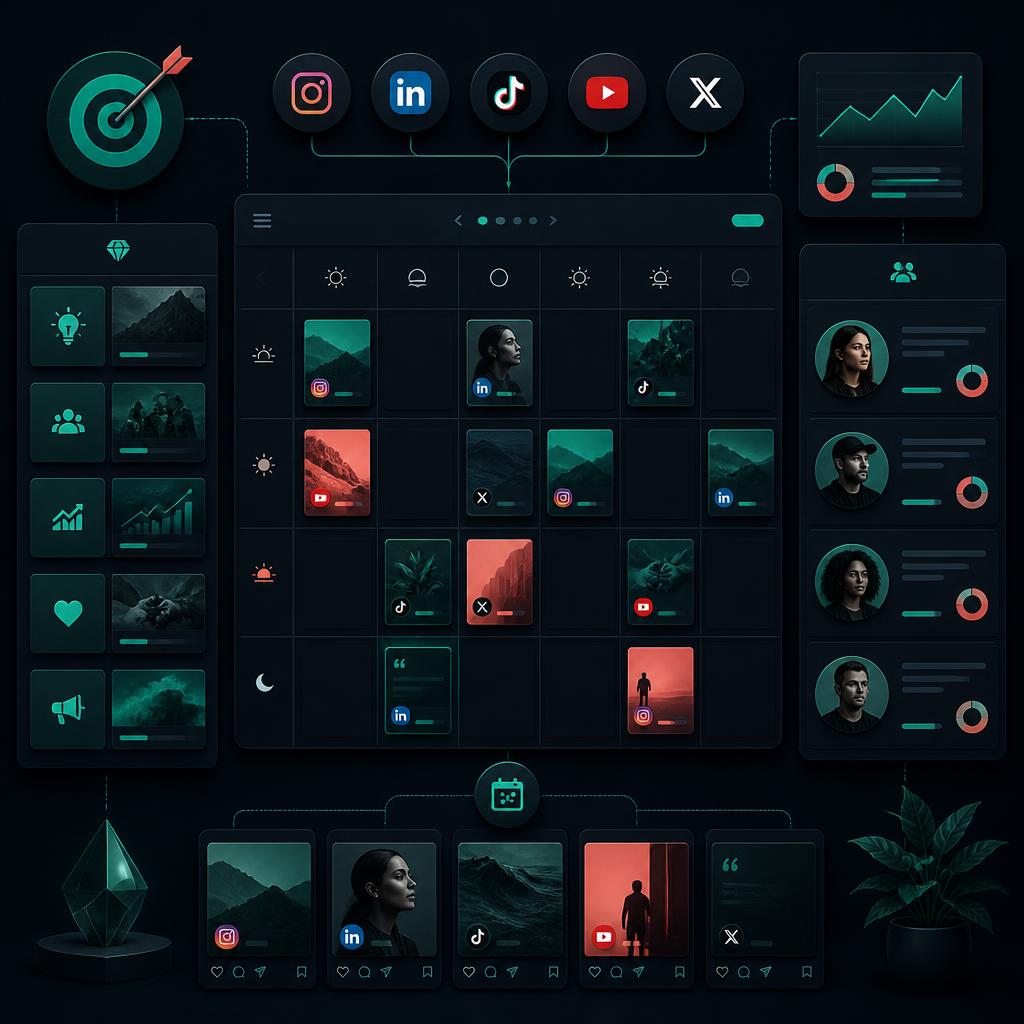
Social media strategy dashboard showing platform selection, content calendar and audience personas

Platform choice should be driven by your customer, not by your personal preference. A B2B consultancy wins on LinkedIn because that is where decision-makers research providers. A lifestyle brand wins on Instagram and TikTok because that is where visual discovery happens. A local trade business wins on Facebook because that is where community recommendation lives.

You do not need to be everywhere. You need to be dominant where your best customers spend time. Choose one primary platform and one secondary platform, then resource them properly before expanding.

  • LinkedIn — B2B, professional services, recruitment, thought leadership
  • Instagram — visual brands, product-led businesses, lifestyle, creators
  • TikTok — attention, education, entertainment, younger audiences
  • Facebook — local businesses, community groups, events, older demographics
  • YouTube — long-form education, tutorials, SEO, evergreen content
  • X — real-time news, public discourse, customer service, tech/media

3. Content that builds demand, not just followers

Follower count is a vanity metric if those followers never buy, refer or engage. Growth-focused social media is built around content pillars that educate, demonstrate and convert. The goal is to make your business the obvious choice before a buyer is actively searching.

A strong content mix usually balances three types: educational content that answers buyer questions, proof content such as case studies and testimonials, and personality content that shows the humans behind the brand. Get the ratio right and every post builds equity.

  • How-to guides and industry explainers
  • Case studies and client results
  • Behind-the-scenes and team content
  • User-generated content and reviews
  • Product or service demonstrations
  • Trend commentary and original insights

4. Community and engagement are the new algorithm

Social media engagement dashboard showing rising followers, comments, shares and conversion funnel

Every major platform now prioritises content that sparks conversations and keeps users on-platform. That means the algorithm rewards replies, shares, saves and time spent — not just likes. Businesses that win in 2026 are the ones that treat engagement as a daily discipline, not an afterthought.

This is where creator partnerships and employee advocacy become powerful. A single creator with a trusted audience can outperform months of corporate posting. Your own team members sharing authentically extends reach far beyond your company page.

6. Measurement that ties to revenue

Social media metrics should never stop at impressions and engagement. The numbers that matter are qualified leads, cost per lead, conversion rate, average order value from social traffic and customer lifetime value. If you cannot connect activity to one of those, you are optimising for noise.

Set up UTM tracking on every link, tag campaigns consistently, and integrate platform data with your CRM or analytics stack. Monthly reporting should compare channel performance against your business goals, not vanity benchmarks.

  • Reach and impressions for awareness
  • Engagement rate and saves for resonance
  • Click-through rate and website traffic
  • Leads and cost per lead by platform
  • Conversion rate and revenue attribution
  • Customer acquisition cost and lifetime value

7. A 90-day social media growth framework

Sustainable growth comes from a system, not sporadic creativity. We run a 90-day framework for clients: audit and positioning in the first month, content engine and community building in the second, and paid amplification and conversion optimisation in the third.

The businesses that stick with this see compounding returns. Their content gets better, their audience gets warmer, and their acquisition cost drops because they are building an owned audience rather than renting attention every month.

Key takeaways: make social media a growth engine

  • Pick platforms based on your buyer, not your preference
  • Balance education, proof and personality in your content mix
  • Treat engagement as a daily discipline, not an afterthought
  • Only promote organic content that has already proven itself
  • Report on revenue metrics, not vanity numbers
  • Run a 90-day system rather than sporadic posting

Frequently asked questions about social media marketing

Which social media platform is best for B2B in 2026?

LinkedIn remains the strongest B2B platform. Decision-makers use it to research providers, read thought leadership and evaluate credibility. B2B service businesses should prioritise LinkedIn first, then add YouTube for long-form authority content.

How often should a business post on social media?

Consistency beats intensity. For most businesses, three to five high-quality posts per week on the primary platform is enough to stay visible without burning out. Quality and engagement matter more than daily volume.

Does social media marketing actually generate leads?

Yes, when it is structured as a funnel. Content builds trust, calls to action drive traffic, landing pages capture leads, and retargeting brings back people who did not convert the first time. Social leads are often warmer than cold outreach because they already know your brand.

What is the difference between organic and paid social media?

Organic social uses free posting and community engagement to reach your existing audience and their networks. Paid social uses platform advertising to target specific audiences, scale proven content and drive predictable traffic. Both work best together.

How long does it take to see results from social media marketing?

Most businesses see audience growth and engagement within 30 days, website traffic improvements within 60 days, and measurable leads or revenue within 90 days. The timeline depends on consistency, content quality and whether you are also using paid social.

Should we work with influencers or creators?

Creator partnerships can accelerate reach dramatically, especially on Instagram and TikTok. The key is alignment: choose creators whose audience matches your buyer profile and whose content style feels natural. Micro-creators often deliver better engagement than celebrity accounts.

Ready to turn social media into a revenue channel?

We build social media strategies that attract the right audience, create demand and convert attention into qualified enquiries.

Explore social media management

Ready to Grow Your Business?

Let's plug you into the right people, the right strategy, and real digital growth.